Key Points
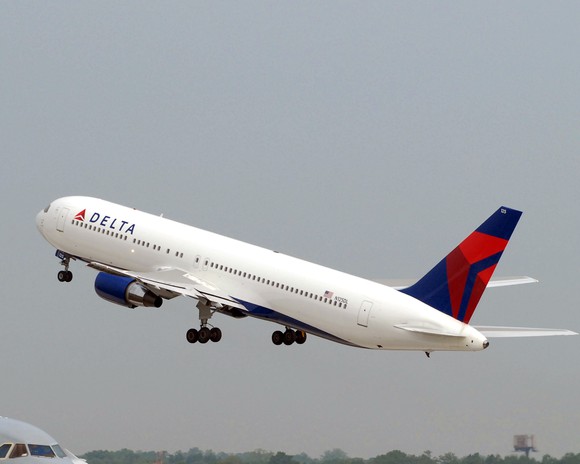
Delta Air Lines famously loves to fly, and it shows. So, too, does Amazon.com (NASDAQ: AMZN), which just signed up Delta as a customer for its new Amazon Leo satellite broadband service. Delta will become Amazon’s second big partner, and much bigger than its first, JetBlue, which made news when it signed up with Amazon in September.
Amazon’s playing a long-shot game of catch-up as it races to match Elon Musk and his Starlink service at SpaceX — but already, the signs of progress are undeniable.
Will AI create the world’s first trillionaire? Our team just released a report on the one little-known company, called an “Indispensable Monopoly” providing the critical technology Nvidia and Intel both need. Continue »
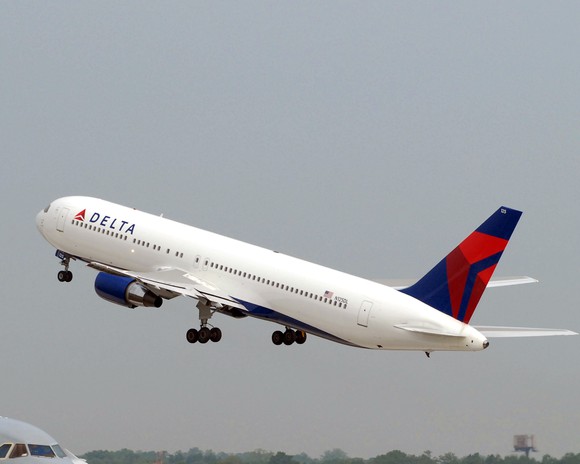
Image source: Delta Air Lines.
Amazon Leo versus Starlink: By the numbers
Consider a few numbers: SpaceX launched its first test satellites in 2018 and ramped up quickly, announcing the start of “beta” service in 2020. As of today, SpaceX has more than 10,000 Starlink satellites in orbit, providing service to more than 150 countries worldwide.
This gave Starlink a five-year head start on Amazon, which put its first Kuipersat test models in orbit only in 2023. Service-ready satellites didn’t begin launching until May 2025 — but no moss is growing on Amazon. As of today, the company has launched nine batches of its rebranded Amazon Leo satellites and has 241 of them in orbit. With more than 90 similar launches planned, and space launchers from United Launch Alliance to Arianespace to SpaceX and Jeff Bezos‘s own Blue Origin engaged in the launch effort, Amazon aims to ultimately put more than 3,000 Leo satellites in orbit.
Amazon Leo versus Starlink: Who’s winning?
With $10 billon budgeted for the effort and years of work remaining to complete it, Amazon desperately needs to sign up customers for its new service and start generating some revenue. Beta service has reportedly already begun for a few select commercial customers. The service is slated to roll out publicly in mid-2026.
It could take much longer for Leo to begin generating material revenue for Amazon, however. Over 240 satellites may sound like a lot, after all, but SpaceX, for example, needed 800 satellites in orbit to support its beta launch. At its current launch cadence of a bit less than one mission per month, Amazon will probably need to launch 18 more times — and require 18 months to do it — to hit that mark.
Interestingly, though, when JetBlue signed on to the service last year, it predicted it would begin outfitting planes with Leo internet service in 2027. Delta is being even more conservative, predicting a 2028 launch date for its first 500 planes to offer Amazon Leo connectivity. Expanding the rollout across Delta’s near-1,000-plane fleet will take even longer.
Meanwhile, SpaceX will expand its lead with Starlink. While JetBlue and Delta are cooling their heels, waiting for Amazon to get its service up and running, SpaceX has already signed up United Airlines, Southwest Airlines, and Alaska Airlines for Starlink. Combined, that’s nearly twice the number of total planes as in the Delta and JetBlue fleets.
That leaves American Airlines and multiple foreign carriers still up for grabs. But of the two services, SpaceX Starlink clearly has the greater momentum. With SpaceX anticipating a big IPO that will give the company even more money with which to promote its service, does Amazon have any hope of catching up?
Why this is important for Amazon
With $717 billion in annual revenue and $77.7 billion in annual profit, according to the latest data from S&P Global Market Intelligence, you might not think Amazon Leo is a big deal for Amazon — that it doesn’t need to beat SpaceX and Starlink at the satellite internet game. That doesn’t mean Amazon doesn’t want to win in space, though.
Consider the stakes: While most people still think of SpaceX as a rocket company, SpaceX Starlink actually drives the bulk of SpaceX’s business. In 2025, Payload Space estimated that $10.4 billion of SpaceX’s $15 billion in 2025 revenue came from Starlink satellite — 69% of total sales. In 2026, Payload estimates Starlink revenue will grow another 80% to $18.7 billion, accounting for 79% of SpaceX’s total revenue.
Amazon is huge in size but has averaged less than 12% revenue growth over the past three years, demonstrating the curse of large numbers — the difficulty of continuing to grow an already enormous business. Adding a satellite internet business similar to Starlink, though, growing $8 billion or more per year, could kick Amazon’s revenue growth up a notch, adding perhaps another 1% to its total growth rate — not a lot, but enough to at least move the needle even on a company as big as Amazon.
This is why Amazon needs Amazon Leo to succeed — and why the Delta deal is a big step in the right direction.
Don’t miss this second chance at a potentially lucrative opportunity
Ever feel like you missed the boat in buying the most successful stocks? Then you’ll want to hear this.
On rare occasions, our expert team of analysts issues a “Double Down” stock recommendation for companies that they think are about to pop. If you’re worried you’ve already missed your chance to invest, now is the best time to buy before it’s too late. And the numbers speak for themselves:
- Nvidia: if you invested $1,000 when we doubled down in 2009, you’d have $523,131!*
- Apple: if you invested $1,000 when we doubled down in 2008, you’d have $51,457!*
- Netflix: if you invested $1,000 when we doubled down in 2004, you’d have $524,786!*
Right now, we’re issuing “Double Down” alerts for three incredible companies, available when you join Stock Advisor, and there may not be another chance like this anytime soon.
*Stock Advisor returns as of April 20, 2026.
Rich Smith has no position in any of the stocks mentioned. The Motley Fool has positions in and recommends Amazon. The Motley Fool recommends Alaska Air Group, Delta Air Lines, and Southwest Airlines. The Motley Fool has a disclosure policy.
5 Stocks Our Experts Predict Could Double In the Next Year
By submitting your email, you'll also get a free pivot & flow membership. A free daily market overview. You can unsubscribe at any time.