Key Points
Nvidia may be a great business, but its AI financing creates ecosystem risk.
Investors should watch the debt, financing structures, and counterparty exposure behind the massive AI infrastructure build-out.
If AI demand slows or customers struggle to repay their debts, problems could spread beyond Nvidia to lenders and investors.
- 10 stocks we like better than Nvidia ›
Billionaire Mark Cuban’s warning that Nvidia‘s (NASDAQ: NVDA) aggressive artificial intelligence (AI) financing could “crumble” the market is one investors should take seriously. This isn’t because Nvidia is suddenly a bad business, but because its AI financing has quietly turned it into a central node in a very leveraged, very interconnected system.
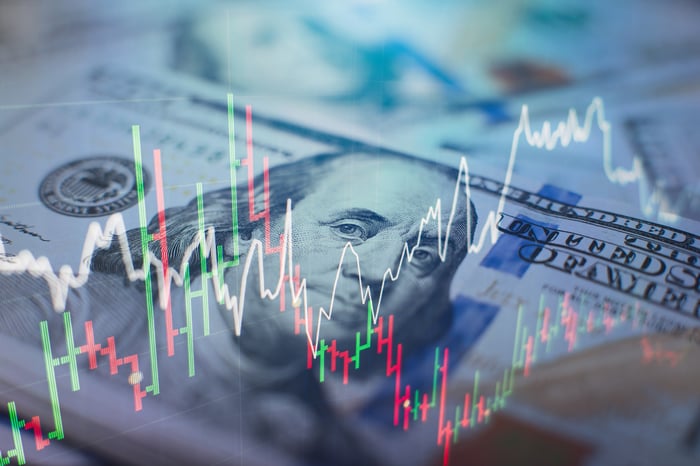
Image source: Getty Images.
Missed Nvidia in 2009? This Rare Signal Is Flashing Again. In 2009, a “Double Down” signal flashed for a little-known chipmaker called Nvidia. For the first time in years, that same “Total Conviction” signal is flashing for a company 1/100th the size of Nvidia. Continue »
Cuban’s point is pretty simple. In his July posts, he compared Nvidia’s role in this AI boom to the IPO machine of the dot‑com era, arguing that “instead of IPOs, Nvidia is the IPO, funding everyone and anyone.” By offering financing, revenue‑sharing, and minimum‑revenue guarantees to data center operators and neoclouds, Nvidia is effectively subsidizing customers’ GPU purchases and build-outs. That makes sense if demand keeps soaring and everyone can pay their bills. It could be fragile if even one big customer stumbles.
Under the hood, there is a lot of “creative” money at work. Nvidia has already committed more than $40 billion to AI investments in early 2026, including huge stakes and financing packages tied to OpenAI, Corning, and Iren. Deals like the proposed $100 billion OpenAI data center plan and multi‑billion-dollar SPV structures for xAI rely on GPUs as collateral, long‑dated lease obligations, and assumptions about AI revenue that are still unproven. Legal analysts are already warning that AI data center funding involves layered private credit, securitizations, and off‑balance‑sheet vehicles where distress in one node can propagate across banks, insurers, and pension funds.
Investors should take Cuban seriously
Cuban’s “crumble” language goes straight at that. If Nvidia is deeply intertwined with hundreds of operators who all borrowed to buy its chips, then a misstep — weaker AI demand, a faster‑than‑expected hardware cycle, or a rival chip breakthrough — could expose the fact that too much infrastructure was built too fast. GPUs depreciate faster than many models assume, and Nvidia itself has moved to a one‑year upgrade cadence, which raises the risk that collateral won’t hold its value if the cycle slows.
From a market‑wide perspective, the problem is not just Nvidia’s equity price. It is that Nvidia’s financing has become a pillar of the AI build-out, with junk bonds, SPVs, and private credit all leaning on the same bet. If those bets go wrong, you could see credit stress spread far beyond tech stocks into lenders and institutions that financed the data center boom.
So yes, I think investors should take Cuban’s warning seriously. Nvidia is still a phenomenal business, but the way it is now funding AI infrastructure means everyone exposed to this theme needs to think not just about earnings, but about counterparty risk and leverage across the ecosystem, especially if you own the lenders as well as the chips.
Should you buy stock in Nvidia right now?
Before you buy stock in Nvidia, consider this:
The Motley Fool Stock Advisor analyst team just identified what they believe are the 10 best stocks for investors to buy now… and Nvidia wasn’t one of them. The 10 stocks that made the cut could produce monster returns in the coming years.
Consider when Netflix made this list on December 17, 2004… if you invested $1,000 at the time of our recommendation, you’d have $399,832!* Or when Nvidia made this list on April 15, 2005… if you invested $1,000 at the time of our recommendation, you’d have $1,374,595!*
Now, it’s worth noting Stock Advisor’s total average return is 968% — a market-crushing outperformance compared to 215% for the S&P 500. Don’t miss the latest top 10 list, available with Stock Advisor, and join an investing community built by individual investors for individual investors.
*Stock Advisor returns as of August 10, 2026.
Micah Zimmerman has no position in any of the stocks mentioned. The Motley Fool has positions in and recommends Corning and Nvidia. The Motley Fool has a disclosure policy.
5 Stocks Our Experts Predict Could Double In the Next Year
By submitting your email, you'll also get a free pivot & flow membership. A free daily market overview. You can unsubscribe at any time.