Key Points
SpaceX confidentially filed for its initial public offering (IPO) on April 1, putting the wheels in motion for what’s expected to be the largest public debut in Wall Street’s history.
Although investor buzz for this IPO is off the charts, several historical headwinds can ruin the party.
A majority of the largest IPOs over the last 27 years have stumbled out of the gate.
- 10 stocks we like better than S&P 500 Index ›
Wall Street is making history at every turn in 2026. Last week, the benchmark S&P 500 (SNPINDEX: ^GSPC) and innovation-powered Nasdaq Composite (NASDAQINDEX: ^IXIC) climbed to fresh all-time highs. But the most exciting event is yet to come.
Although artificial intelligence (AI) superstars OpenAI and Anthropic are toying with the idea of going public later this year, Elon Musk’s space and AI juggernaut, SpaceX, is on track to beat them to the punch. When SpaceX goes public, it’s expected to obliterate the record for the largest initial public offering (IPO).
Will AI create the world’s first trillionaire? Our team just released a report on the one little-known company, called an “Indispensable Monopoly” providing the critical technology Nvidia and Intel both need. Continue »
The wheels of the SpaceX IPO were put into motion on April 1, when the company filed a confidential IPO with regulators. Based on projected timelines, SpaceX could debut as early as the latter half of June.
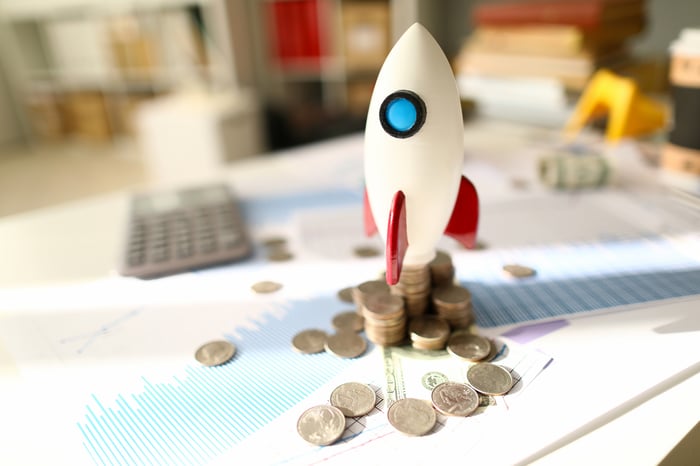
Image source: Getty Images.
Several reports suggest Musk’s company is seeking to raise $75 billion and earn a valuation of $1.75 trillion to $2 trillion. For context, Saudi Aramco holds the title of largest capital raise at $29.4 billion following its December 2019 IPO.
While the buzz surrounding SpaceX is electric, be warned that this year’s hottest IPO is facing a historical triple whammy.
1. Large IPOs tend to flop
To begin with, SpaceX will have to overcome the stigma of brand-name IPOs stumbling out of the gate.
Since 1999, U.S. investors have witnessed five monster IPOs, as well as the aforementioned debut of Saudi Aramco in overseas markets. Only one of these six brand-name IPOs (Visa) was higher six months after its debut. Comparatively, Facebook (now Meta Platforms), Alibaba Group, General Motors, United Parcel Service, and Saudi Aramco all declined by 8% to 38% six months after going public.
Even though past events can’t guarantee what’s to come, the poor performance of newly public brand-name companies over the previous 27 years indicates that investors allow their emotions to get the better of their judgment.
Image source: Getty Images.
2. SpaceX’s valuation is a historical eyesore
A second historical headwind awaiting SpaceX is its egregious valuation.
To be completely transparent, we don’t know what’s under the hood at Musk’s SpaceX. According to a Reuters report in late January, the company generated $15 billion to $16 billion in sales last year. But this figure doesn’t include AI start-up xAI or social media platform X, both of which are now under the SpaceX umbrella.
Despite not having these specifics, SpaceX is likely valued at a price-to-sales (P/S) ratio in the high double digits or low triple digits. Historically, companies at the forefront of a game-changing technology or trend haven’t been able to sustain P/S ratios above 30, let alone close to or above 100.
3. History hasn’t been kind to game-changing technologies
Thirdly, history has shown that every next-big-thing technology or trend for more than 30 years has navigated an early innings bubble-bursting event.
The reason bubbles form is that investors consistently overestimate the adoption and/or optimization of new technologies/innovations. Although demand for AI infrastructure solutions and space infrastructure is climbing at a breakneck pace, we’re still quite a ways from the space economy and artificial intelligence optimizing SpaceX’s sales and profits.
No high-ceiling addressable opportunity has escaped this bubble-bursting fate since the mid-1990s, which is potentially terrible news for SpaceX’s early investors.
Should you buy stock in S&P 500 Index right now?
Before you buy stock in S&P 500 Index, consider this:
The Motley Fool Stock Advisor analyst team just identified what they believe are the 10 best stocks for investors to buy now… and S&P 500 Index wasn’t one of them. The 10 stocks that made the cut could produce monster returns in the coming years.
Consider when Netflix made this list on December 17, 2004… if you invested $1,000 at the time of our recommendation, you’d have $497,606!* Or when Nvidia made this list on April 15, 2005… if you invested $1,000 at the time of our recommendation, you’d have $1,306,846!*
Now, it’s worth noting Stock Advisor’s total average return is 985% — a market-crushing outperformance compared to 200% for the S&P 500. Don’t miss the latest top 10 list, available with Stock Advisor, and join an investing community built by individual investors for individual investors.
*Stock Advisor returns as of April 30, 2026.
Sean Williams has positions in Meta Platforms and Visa. The Motley Fool has positions in and recommends Meta Platforms, United Parcel Service, and Visa. The Motley Fool recommends Alibaba Group and General Motors. The Motley Fool has a disclosure policy.
5 Stocks Our Experts Predict Could Double In the Next Year
By submitting your email, you'll also get a free pivot & flow membership. A free daily market overview. You can unsubscribe at any time.